
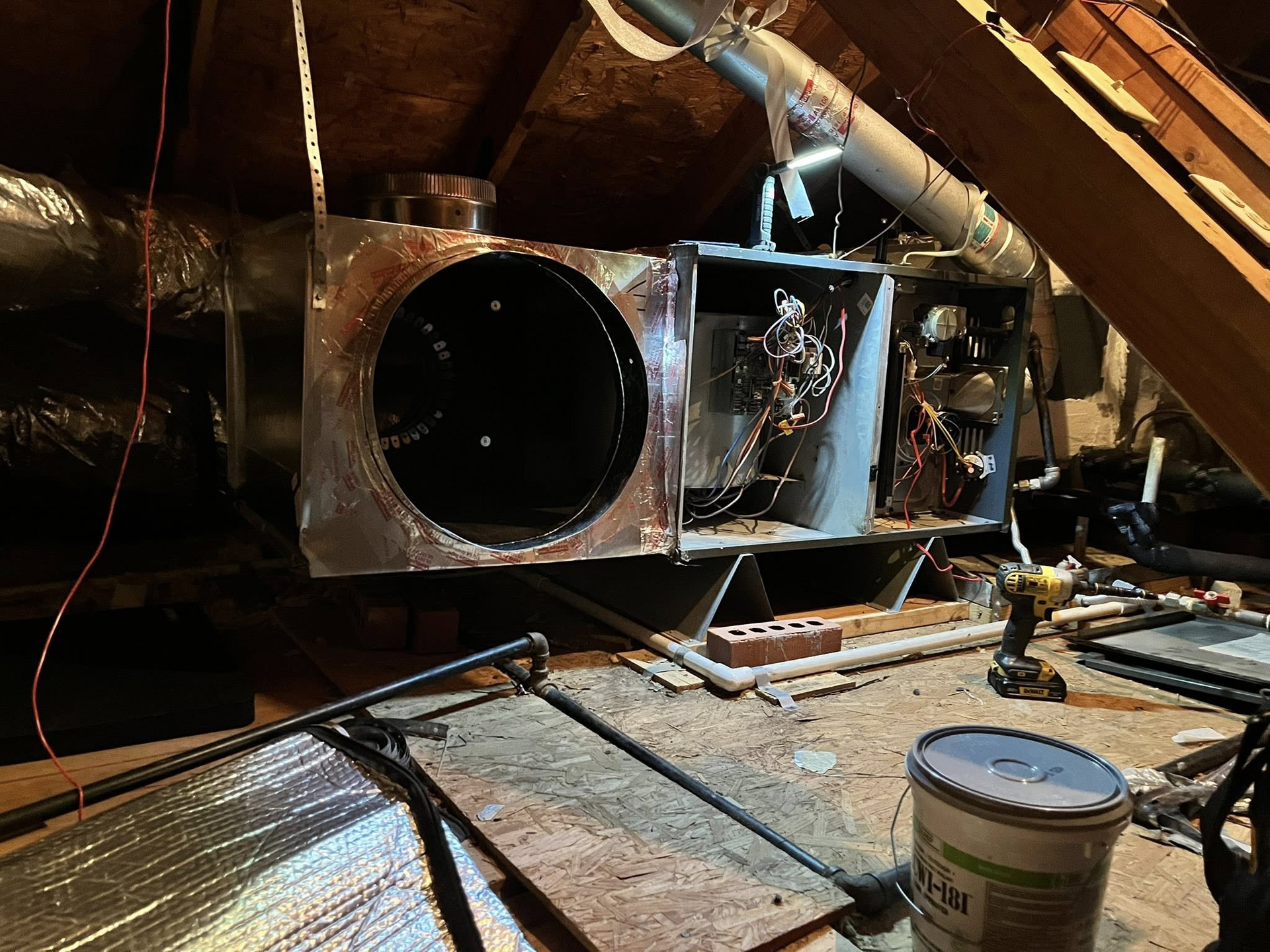
Replacing Equipment That No Longer Performs
Furnace Installation in Tomball for systems requiring frequent repairs or struggling to maintain comfort
Aging furnaces eventually reach a point where repair costs accumulate faster than the remaining lifespan justifies, heat exchangers develop cracks that pose safety concerns, and efficiency declines to the point where monthly energy costs offset any savings from delaying replacement. You recognize this when the system cycles repeatedly without reaching target temperature, certain rooms never warm adequately despite damper adjustments, or multiple service calls within a single season reveal different failing components. Checkmate A/C & Heat handles furnace installation throughout Tomball when replacement makes more sense than continuing to invest in equipment that no longer delivers reliable performance.
This process begins with load calculation to determine the heating capacity your home actually requires based on insulation levels, window areas, and air leakage patterns, which prevents the common mistake of oversizing equipment that short-cycles and reduces comfort. The installation includes removing the old furnace, modifying ductwork connections if needed to match the new unit's configuration, installing proper venting sized for the equipment's output, and verifying refrigerant charge if the system includes integrated cooling.
Request a free estimate to compare replacement costs against ongoing repair expenses and efficiency improvements.
How Modern Equipment Changes Daily Operation
Proper system sizing ensures the furnace runs long enough each cycle to distribute heat evenly throughout the home rather than satisfying the thermostat before distant rooms receive adequate airflow. Checkmate A/C & Heat matches equipment capacity to calculated load and adjusts blower speed to work with existing ductwork, which prevents the noise and inefficiency that result from forcing too much air through undersized ducts or inadequate airflow from oversized systems that cycle off prematurely.
Once installation is complete, you notice rooms reach target temperature simultaneously rather than the thermostat location warming first while other areas lag behind, monthly energy costs decline because modern equipment achieves higher combustion efficiency and better airflow control, and the system operates quietly without the rattling or rumbling that indicated failing components in the old furnace. Temperature swings narrow because properly sized equipment runs longer cycles that stabilize indoor conditions instead of rapid on-off cycling that creates uncomfortable fluctuations.
New installations include manufacturer warranty coverage on parts for a specified period, typically five to ten years depending on the model, and labor warranty protection that covers installation-related issues. The equipment also qualifies for utility rebates in some cases when efficiency ratings exceed minimum thresholds, which reduces the net cost of replacement.
Questions Property Owners Ask Before Replacement
Deciding whether to repair or replace heating equipment involves understanding what modern systems provide and how installation practices affect long-term performance.
How do I know when replacement makes more sense than repair?
When repair costs approach half the price of new equipment, the furnace exceeds fifteen years of age and efficiency ratings fall significantly below current models, or safety concerns like cracked heat exchangers require replacement of major components.
What does proper system sizing involve?
Load calculation accounts for square footage, insulation R-values, window U-factors, air leakage rates measured during blower door testing, and ductwork capacity to deliver conditioned air efficiently throughout the home.
Why does installation quality affect comfort in Tomball homes?
Incorrectly sized ductwork creates pressure imbalances that reduce airflow to certain rooms, improper venting allows combustion gases to backdraft into living spaces, and refrigerant charge errors reduce capacity and efficiency in systems with integrated cooling.
What happens during a free estimate?
The technician evaluates current equipment condition, measures existing ductwork, calculates heating load based on home characteristics, and provides transparent recommendations with pricing for models that match your capacity requirements and budget parameters.
How long does furnace installation typically take?
Most residential installations complete within one day once equipment arrives, though modifications to ductwork, venting, or electrical service can extend the timeline depending on the complexity of adapting existing infrastructure to new equipment specifications.
Checkmate A/C & Heat provides honest assessments to help you decide whether repair or replacement best serves your comfort and budget. Schedule an equipment evaluation to review your options based on current system condition and performance.